
Corporate Desk
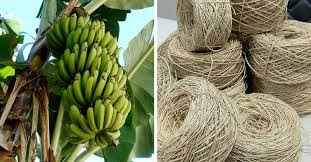
The Small and Medium Enterprises Development Authority (SMEDA), in collaboration with the Food and Agriculture Organization (FAO), has launched an initiative to convert banana crop waste into eco-friendly textile fibre, aiming to strengthen Pakistan’s bio-economy and promote circular growth.
The project was formally introduced at an inception workshop titled “Bananas in Pakistan’s Bio-economy: Transforming Waste into Textile”, held on the sidelines of the flagship “Made in Pakistan – SME Cluster Showcase Expo 2026”. The initiative forms part of the Ministry of Industries and Production’s broader efforts to advance national economic objectives through sustainable industrial development.
According to SMEDA officials, the project falls under the “Elimination of Hazardous Chemicals from Supply Chains Integrated Programme”, funded by the Global Environment Facility (GEF) and executed by UN agencies, with implementation partners selected across eight countries.
The workshop brought together policymakers, development partners, researchers and entrepreneurs to examine the potential of banana waste as a sustainable raw material for Pakistan’s textile and allied industries.
Scheduled to run from 2026 to 2031, the project is expected to engage around 40,000 women and involve students in research and development activities. Officials said the initiative will focus on pilot projects, technology transfer, training and capacity building, certification support, market linkages and the development of traceability systems.
Pakistan cultivates bananas on more than 40,000 hectares, with significant quantities of agricultural residue either discarded or burnt, contributing to environmental pollution. Officials noted that this waste can be processed to extract raw banana fibre for use in textiles, handicrafts, bags and packaging materials.
Amina Bajwa, Assistant FAO Programme Officer, said Pakistan ranks among the countries most vulnerable to climate change, facing challenges including agricultural emissions, residue burning and environmental degradation. She said converting banana waste into high-value products presents a practical solution to reduce pollution while creating new income streams.
“The collaborative efforts will help Pakistan generate revenue and mark the beginning of a journey towards sustainable bio-economy solutions,” she said.
Muhammad Ijaz Ghani, Senior Joint Secretary at the Ministry of Climate Change, described the initiative as socially inclusive and aligned with the country’s largest export sector — textiles. He highlighted its potential contribution to reducing pollution and resource depletion, while commending SMEDA’s leadership in promoting climate-friendly projects consistent with national priorities.
Dr Julius, FAO Programme Coordinator and Provincial Head Sindh, described the province as the epicentre of Pakistan’s banana economy. He raised concerns over water intensity and post-harvest losses, noting that nearly 16 per cent of bananas go to waste. He stressed the importance of further research and ensuring farmers’ voices remain central to project design and implementation.
Habibur Rehman of the National Textile University–FAO partnership outlined the project framework, stating that the initiative seeks to reduce reliance on imported cotton while addressing pollution from agricultural waste. He identified regulatory gaps, limited access to finance, weak institutional coordination and value-chain deficiencies as key barriers to sectoral growth.
During the workshop, Sheharbano, an entrepreneur producing banana fibre goods, shared her experience and thanked SMEDA for providing a platform to showcase her products. She said the initiative had enabled her to earn a livelihood and encouraged her to promote banana fibre products as a contribution to national economic development.
In his closing remarks, Ashfaq Ahmed, General Manager (Microenterprise) at SMEDA, described the project as a landmark collaboration between SMEDA and FAO. He said the initiative would help convert banana waste into value-added fibre products, mitigate environmental pollution, strengthen the value chain and create income-generating opportunities for small and medium enterprises across the country.