
Web Desk
Pakistan has condemned the recent comments by Indian Prime Minister Narendra Modi as “reckless provocation” and a threat to regional peace.
Reacting to the remarks, the Pakistan Ministry of Foreign Affairs has expressed regret over the “continued erosion of maturity and decorum in Indian statecraft”.
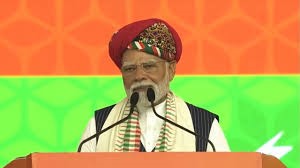
Modi’s speech was “delivered in Gujarat with the theatrical flourish of a campaign rally rather than the sobriety expected of the leader of a nuclear-armed state,” noted the Foreign Office in its statement.
“The hate-driven invocation of violence in his remarks is deeply disturbing, not only for its content but for the dangerous precedent it sets in region already burdened by volatility,” the FO added.
“These remarks violate the principles of the United Nations Charter,” the FO noted further. “Member states are obligated to resolve disputes peacefully and to refrain from the threat or use of force.”
Moreover, Modi’s comments are an attempt to distract from what it described as ongoing human rights abuses and demographic changes in Indian Illegally Occupied Jammu and Kashmir (IIOJK), added the statement.
Pakistan’s contributions to UN peacekeeping and global counter-terrorism efforts “speak louder than any hostile soundbite,” the FO maintained, accusing the Indian government of promoting extremism through “majoritarianism, religious intolerance, and the systematic disenfranchisement of minorities”.
Reiterating its commitment to peace and sovereign equality, Islamabad warned that any threat to its security would be met with a “firm and proportionate” response, citing Article 51 of the UN Charter.
Islamabad urged the international community to take note of what it described as India’s “escalating rhetoric”, which it said undermines regional stability and the prospect of lasting peace.
The latest escalation between Pakistan and India began on April 22, when an attack in the IIOJK resort town of Pahalgam killed 26 people. India immediately blamed Pakistan for the incident, despite providing no public evidence.
In response, India undertook a series of hostile actions the next day on April 23, including suspending the 65-year-old Indus Waters Treaty (IWT), cancelling visas for Pakistani citizens, closing the Wagah-Attari border crossing, ordering the shutdown of the Pakistan High Commission in New Delhi, and reducing diplomatic staff at each other’s embassies.
Pakistan strongly rejected the accusation, calling it unsubstantiated, but took reciprocal measures through its National Security Committee (NSC). These included halting trade with India, closing Pakistani airspace to Indian aircraft, and other countersteps.
Tensions further escalated in the early hours of May 7, when missile strikes hit six cities in Punjab and Azad Jammu and Kashmir (AJK), destroying a mosque and killing dozens of civilians, including women, children, and the elderly.
In a swift military response, Pakistan’s armed forces shot down Indian warplanes, including three Rafale jets, widely regarded as a key asset of the Indian Air Force. Over the following two days, India launched waves of Israeli-made drones, which were also neutralised by Pakistan’s military.
The confrontation intensified again in the early hours of May 10, when India targeted several Pakistani airbases with missile strikes. In retaliation, Pakistan launched Operation Bunyanum Marsoos, damaging Indian military installations, including missile storage sites, airbases, and other strategic targets.
By Saturday evening, US President Donald Trump announced that a ceasefire had been reached following intense diplomatic efforts overnight. Minutes later, the agreement was confirmed separately by Pakistan’s Foreign Minister Ishaq Dar and the Indian foreign secretary.
But despite the military ceasefire the war of narratives has waged on.