
By Muhammad Luqman
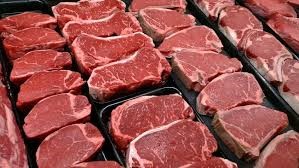
In a bid to double Pakistan’s meat exports, the Punjab Livestock Department is planning to establish a disease-free zone in the southern Punjab district of Bahawalnagar, along with developing 15 disease-control compartments across the province. The initiative aims to ensure that livestock reared for export is healthy and safe for human consumption.
“Foot and Mouth Disease (FMD) is currently the major barrier hindering Pakistan’s meat exports to China, the European Union, and Japan,” said Khaliq Shafee, Director at the Punjab Livestock Department.
In an interview, he said Punjab is aggressively implementing an FMD control strategy with support from the United Nations’ Food and Agriculture Organization (FAO).
He expressed hope that these measures by the Punjab government would help boost Pakistan’s meat exports from the current level of US$512 million to US$1 billion within the shortest possible time, mainly through geographical diversification, as exports are currently focused on the Middle East.
Shafee added that Punjab has many indigenous livestock breeds with strong genetic potential to produce high-quality meat for international markets.
Citing the Economic Survey 2025–26, he said Punjab contributes 60% of the country’s beef production and is modernizing the sector to meet global standards. Key meat-producing breeds include: Cattle: Cholistani, Sahiwal, Brahman Cross, and Nili-Ravi, Goats: Beetal, Teddy Cross, and Barbari and Sheep: Thalli and Kajli
According to the Agriculture Census of Pakistan 2024, Punjab has 26.968 million cattle, 29.561 million buffaloes, 13.385 million sheep, and 31.309 million goats.
“The beef production, which is approximately 2.5 million tons, exceeds local consumption, creating exportable surpluses,” he said.
However, he acknowledged that Pakistan’s meat exports face challenges, including yield gaps, low traceability standards, and domestic price hikes.
Shafee noted that Punjab has several modern slaughterhouses and meat-processing facilities that comply with international hygiene and technology requirements.
He added that a Livestock Card has been launched to support beef producers, and interest-free loans are being disbursed to subsistence livestock owners.
“An interest-free loan of Rs 27,000 per male calf is being provided to livestock farmers for the purchase of Wanda, silage, and mineral mixtures from registered vendors,” he explained.
However, meat exporters complain of undue delays in implementing the disease-control compartments project.
“The project was conceived and developed two years ago but could not be implemented due to delays in approval by the Punjab cabinet,” said Syed Hassan Raza, Senior Vice Chairman of the All Pakistan Meat Exporters and Processors Association.
He said that excessive regulation of meat and milk markets by the government has discouraged livestock farming. “Let the market decide the prices of meat and milk,” he stressed.
Raza added that local cattle breeds are traditionally reared for milk production rather than meat.
“We need to adopt foreign meat breeds, either by importing them or through crossbreeding with local cows,” he said.
He also demanded the removal of the 18% tax on mutton and beef, arguing that it was unfair to impose taxes on export commodities.
“By making Pakistani meat more competitive, you can target China and other markets in addition to the existing Gulf region,” Raza said.
He said that government should come up for an incentive program for the meat sector to enable over 100 exporters with 35 meat processing plants to earn foreign exchange for the country.